
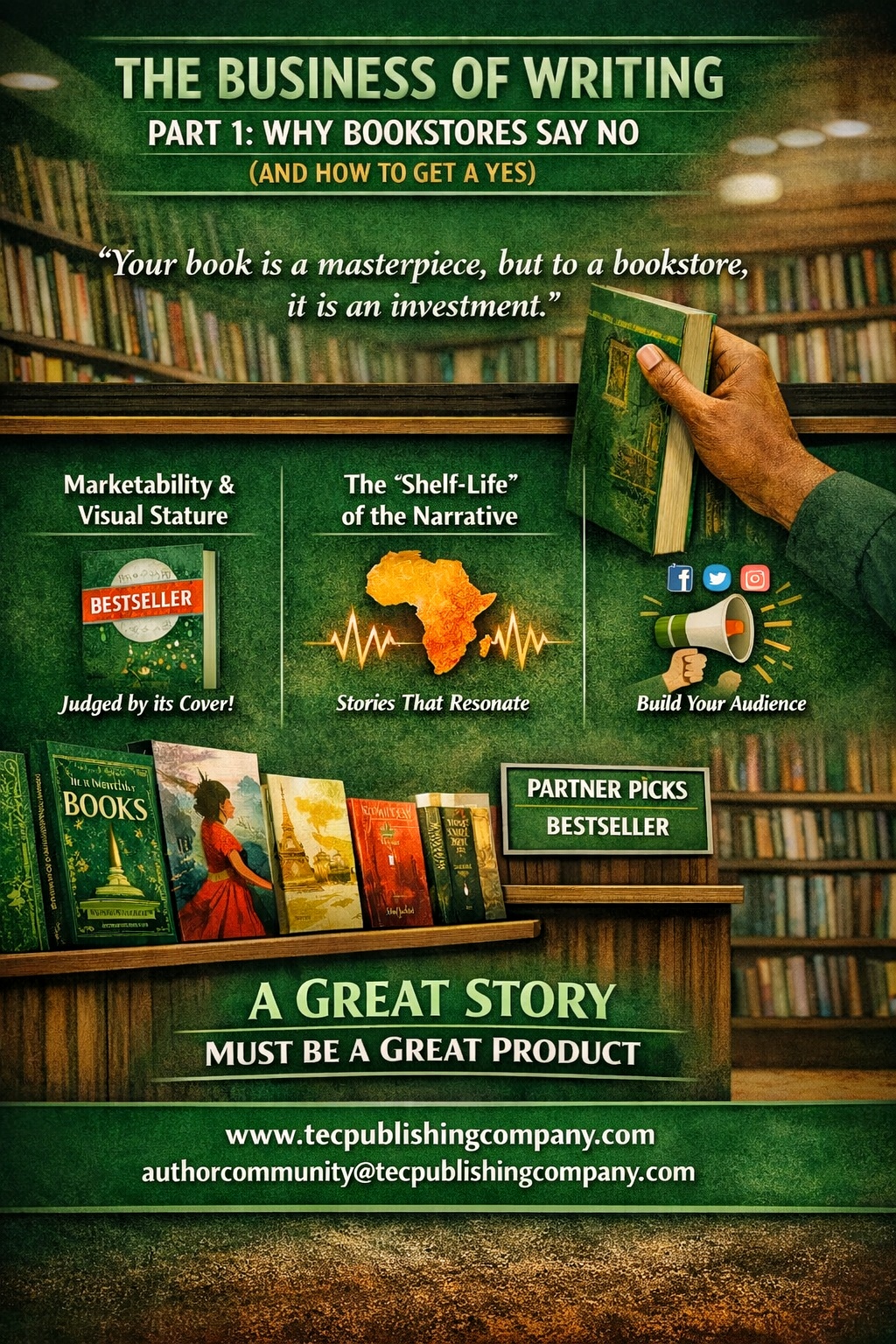
“Your book is a masterpiece, but to a bookstore, it is an investment.”
Every author dreams of the moment they see their book on a bookstore shelf.
But have you ever wondered what it takes to get there or even stay there?
One of the hardest truths I share with authors at TEC is this:
A great story is the requirement, but a great “product” is what gets you sold.
When I walk into meetings with bookstore managers and procurement teams, I’m not just there as a fan of your work.
I’m there as a strategist!
Bookstores are businesses, and their shelf space is their most valuable real estate.
If your publisher is pushing you to refine your “Why,” polish your cover (or even do a total redesign), or tighten your story, it’s because we know exactly what stockists are looking for.
Here are the 3 major things bookstores consider before agreeing to a partnership:
✅Marketability & Visual Stature:
A book is judged by its cover, literally!
Bookstores look for professional, high-quality finishes that can compete with international titles.
At TEC, we obsess over the “Anatomy of a Book” because if it doesn’t look like it belongs on a global shelf, it won’t even make it into the stockroom, talk more of past it.
Your cover is your first handshake with a stranger.
If it doesn’t grab their attention at a glance, they don’t even bother to check the “about” (blurb) or content.
✅The “Shelf-Life” of the Narrative:
Stockists want stories that move!
They look for themes that are currently resonating with readers.
Right now, there is a massive hunger for authentic African voices that tackle real-world complexities, family dynamics, cultural fusion, and personal transformation.
If your publisher is asking you to make your themes “sharper,” it’s to ensure your book has a heartbeat that readers can feel from across the room.
✅Discoverability & Author Platform:
See ehn, I have said this one too many times to several authors:
A bookstore isn’t a storage facility; it’s a marketplace.
They want to know: Who is looking for this book? They look for authors (and publishers) who are active, engaged, and already building a community.
They need to know that you are not solely depending on them for sales.
They need to know that you, as the author, believe in your book enough to put in the work and investment in pushing it to the market.
They stock the books that people are already talking about so you must create buzz around your book!
Dear Author,
When we ask you to edit that “darling” chapter or rethink your title, we aren’t trying to change your story.
When we ask you to redesign your cover or work on your layout, we aren’t trying to undermine your preferences.
We are trying to protect your legacy.
We want to ensure that your book makes it into that shelf and doesn’t just sit there, but flies off it.
Trust the process.
Your publisher is the bridge between your private notebook and the world’s hands.
This is how we build legacies.
Authors, what is one thing you’ve learned about the “business side” of writing that surprised you?
Let’s talk in the comments.